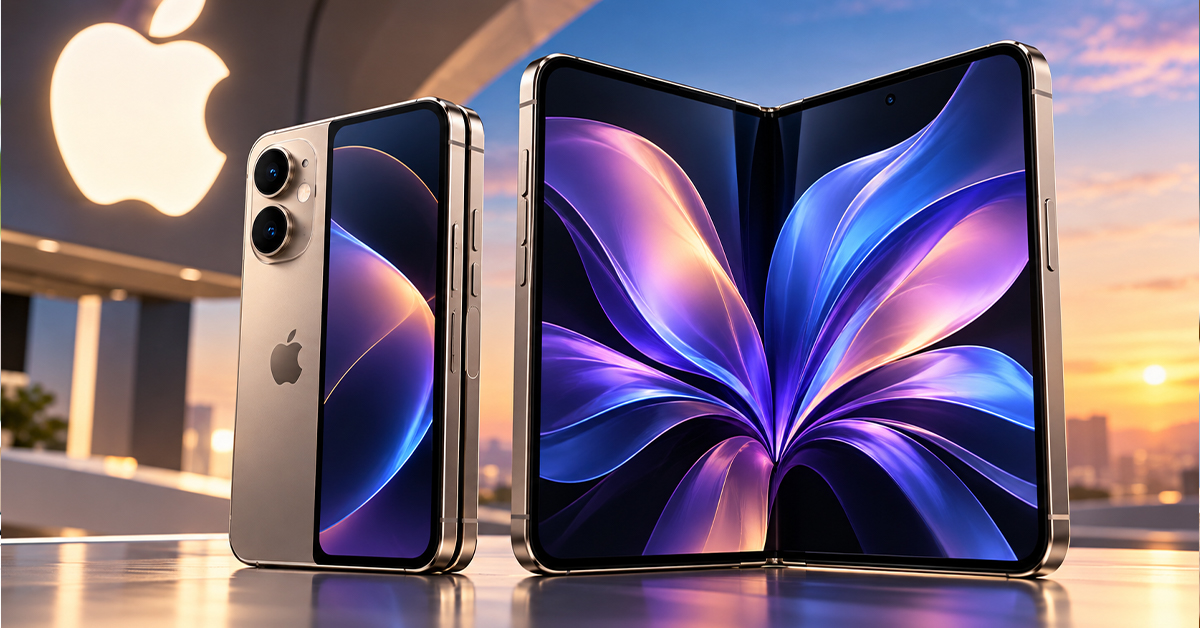
Apple’s reported entry into the foldable smartphone market with the iPhone Duo would bring a new design to the iPhone lineup. Unveiled on September 10, 2026, according to the supplied research, the device combines a conventional outer screen with a larger display that opens like a book.
With a reported starting price of approximately $1,999, the Duo targets people who want a larger screen without leaving Apple’s software ecosystem. Its folding design brings potential benefits, but also raises questions about camera capabilities, repair costs, and everyday usability.
Apple iPhone Duo: Hardware and Display
The iPhone Duo reportedly features a 5.4-inch outer OLED screen and a 7.6-inch inner LTPO OLED display with a 120Hz ProMotion refresh rate. The internal screen uses ultra-thin glass and a nano-texture finish designed to diffuse reflected light.
| Feature | Reported specification |
|---|---|
| Displays | 5.4-inch outer OLED; 7.6-inch inner LTPO OLED, 120Hz |
| Processor and memory | A20 Pro, 2nm process; 12GB RAM |
| Battery | 5,400mAh dual-cell |
| Thickness | 5.2mm unfolded |
| Cameras | Dual 48MP rear cameras; 12MP Center Stage front camera; under-display FaceTime camera |
| Storage | Up to 2TB |
| Durability | IP68 rating |
These specifications come from the research brief and require confirmation against Apple’s official documentation.
The device reportedly uses a Grade 5 titanium frame and a hinge with more than 100 parts. Its design includes zirconium-based liquid-metal shafts and recycled titanium covers, intended to improve rigidity and control the opening and closing motion.
The engineering matters because a foldable display must bend repeatedly while remaining usable. However, an IP68 rating does not eliminate the risk of screen damage, hinge problems, or expensive repairs.
A Bigger Screen, but a Different User Experience
The 7.6-inch internal display could make reading, viewing documents, and multitasking more comfortable than on a conventional phone. For users who regularly switch between a phone and tablet, the larger workspace may be useful.
Apple’s reported iOS 27 interface adapts to the folding design, with the Dynamic Island positioned vertically along the display edge. The research also describes Duo Preview, which lets photo subjects view framing on the outer screen, and Smart Take, which can automatically trigger a photo when the software recognizes a suitable pose.
The value of these features will depend on software reliability and third-party app support.
There are also accessibility questions. Early hands-on reports cited in the brief describe left-handed users having difficulty reaching dock icons positioned along the right side. Whether iOS 27 will offer a left-handed dock option remains unverified.
The reported use of Touch ID in the side power button instead of Face ID is another change. It accommodates the thin design, but users accustomed to facial authentication will need to adjust.
Cameras and Battery: Important Trade-Offs
The Duo reportedly has a 48MP Fusion main camera with a 2x optical-quality crop and a 48MP ultra-wide camera. It lacks a dedicated optical telephoto lens and variable aperture, both listed in the brief as features of the iPhone 18 Pro.
An optical-quality crop is not equivalent to a dedicated telephoto lens, particularly for photographing distant subjects. Buyers who prioritize photography should compare the Duo with conventional flagship phones rather than assuming its higher price means a more complete camera system.
The reported 5,400mAh dual-cell battery is split across the folding chassis. Apple reportedly claims up to 31 hours of video playback on the inner screen and 44 hours on the cover display.
These are company claims that require verification. Battery life depends on brightness, network use, applications, and other conditions. Capacity and manufacturer playback figures alone cannot establish that the Duo lasts longer than competing foldables.
Price, Repairs and the Cost of Buying Early
The research brief lists the following regional prices:
| Market | Reported starting price | Highest listed price |
|---|---|---|
| China | 15,999 yuan | 26,499 yuan |
| India | ₹299,900 | ₹449,900 |
| Singapore | S$3,099 | S$4,899 |
These prices are not independently confirmed retail figures. Taxes, storage options, and regional pricing policies may affect the final cost.
The brief cites Chinese retail survey reports describing repair expenses of around 10,000 yuan for two repairs and resale values falling approximately 30% from the original price. These figures are not verified repair or resale results for the iPhone Duo.
Before buying a first-generation foldable, check warranty coverage, repair availability, and replacement-screen costs. A conventional iPhone 18 Pro may offer a more familiar design and additional camera features, while the Duo’s main appeal is its folding screen.
Why the Foldable Matters for Technology Manufacturing
The Duo could also change Apple’s supplier relationships. According to the brief, Lens Technology and Biel Crystal split ultra-thin glass orders equally, while Lingyi iTech supplies approximately 60% of small hinge structural components. Samsung Display reportedly holds a three-year exclusive supply contract for the foldable OLED panels.
These arrangements illustrate the specialized engineering behind foldable devices. Precision hinges and flexible displays require manufacturing capabilities beyond conventional smartphone assembly.
The brief also describes a geographic split: China remains central to complex component engineering for the first-generation Duo, while India handles high-volume assembly of standard iPhone models. This allows Apple to expand assembly locations while relying on established precision-component suppliers.
Counterpoint Research is cited as forecasting that Apple could capture 25% of the global foldable market in its first year and 40% by 2027. These are projections, not actual sales results. Demand, production capacity, pricing, and competition will determine the eventual outcome.
What Readers Should Know
The iPhone Duo reportedly combines a large folding display with Apple’s software ecosystem, but its premium price does not guarantee better cameras, longer battery life, or lower repair costs.
Before buying, compare the final regional price, repair coverage, camera requirements, and independently tested battery performance. The folding design may suit users who need more screen space, but its long-term reliability and value still require real-world evidence.